Fair Customer Treatment and Fostering Integrity in Finance Ministry of Justice Collaborates with the Ministry of Finance and Taiwan Financial Holdings to Upgrade Sustainable Finance



- Publication Date:
- Last updated:2026-08-13
- View count:192
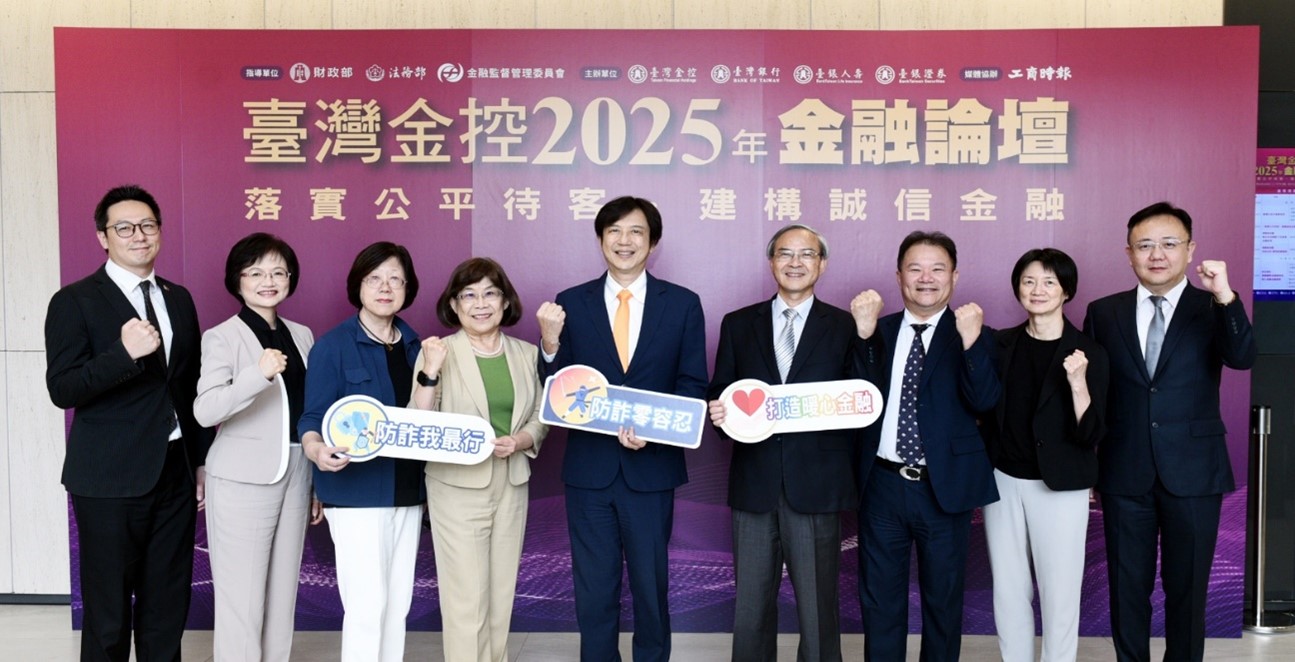
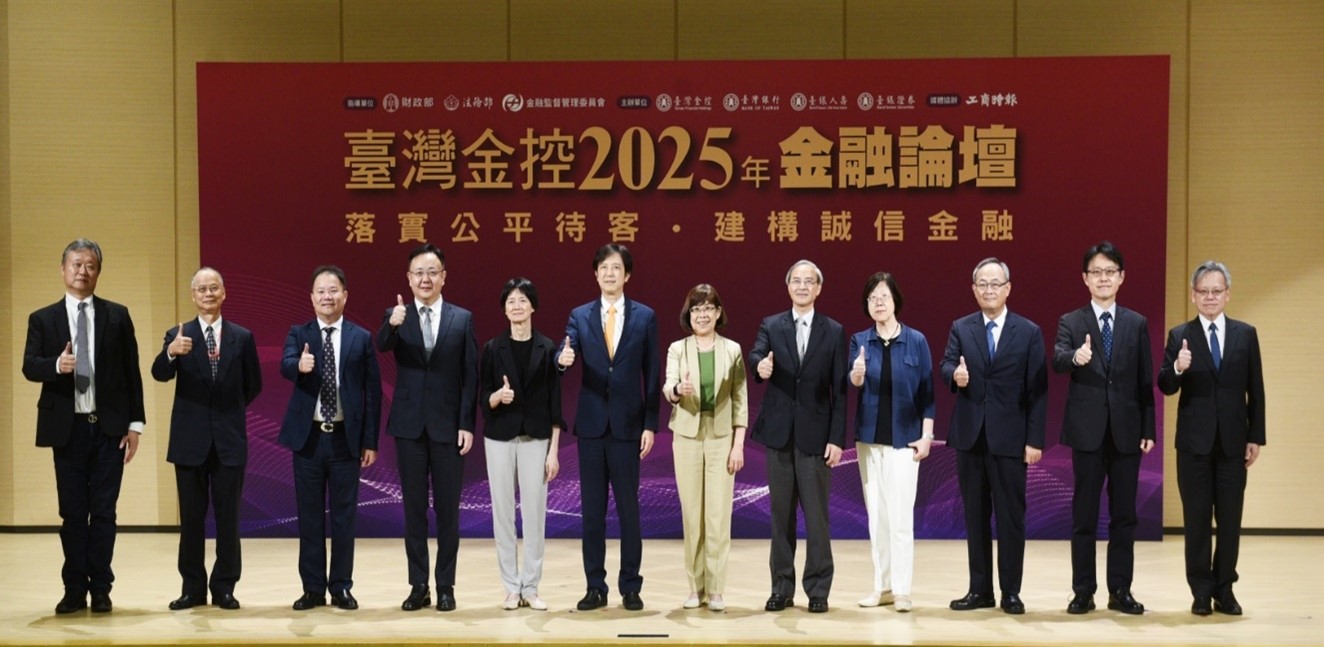
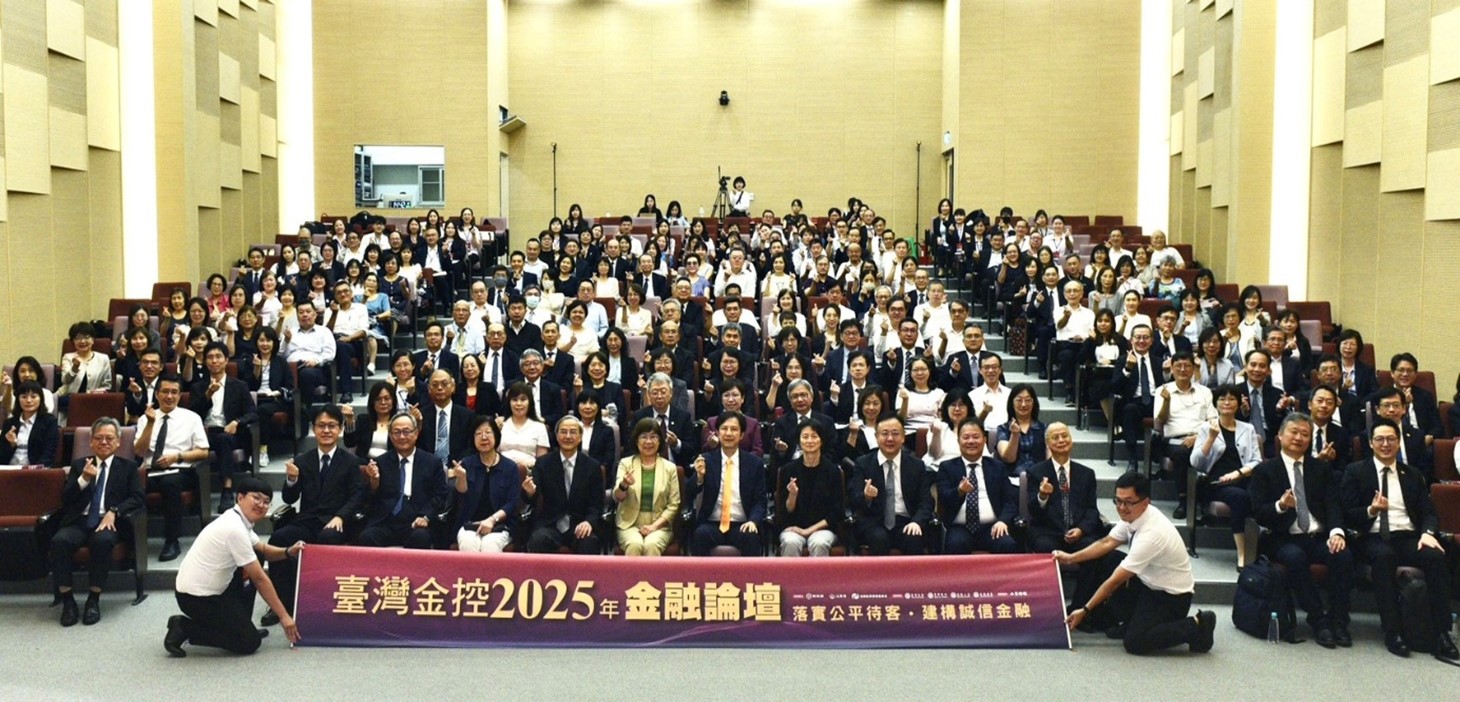
To continue implementing the corporate philosophy of integrity and sustainable finance while actively supporting the government's goals of transparency, integrity, and competence, Taiwan Financial Holdings Co., Ltd. held the Taiwan Financial Holdings 2025 Financial Forum on August 26. The event invited around 200 participants, including representatives from the Ministry of Justice (MOJ), the Ministry of Finance (MOF), the Financial Supervisory Commission (FSC), major domestic government-owned banks, and clients of the Bank of Taiwan. The forum focused on upholding fair customer treatment in banks and building a culture of financial integrity. Participants engaged in inter-departmental exchanges and discussed how the financial industry can leverage technology to enhance ethical management, ensure fair customer treatment, and strengthen integrity and transparency in Taiwan's financial system, ultimately fostering public trust in financial safety and the rule of law.
The forum opened with remarks from Taiwan Financial Holdings Chairwoman Ling, Joanne, MOJ Chief Secretary Yu, Li-Chen, MOF Political Deputy Minister Juan, Ching-Hwa, and FSC Vice Chairperson Chen, Yen-Liang. Other distinguished guests included Agency Against Corruption (AAC) Director-General Feng, Cheng, Bank of Taiwan Securities Chairman Lee, Shu-Sen, Bank of Taiwan Life Insurance Chairman Chang, Chih-Hung, Taiwan Financial Holdings President Shih, Ma-Li, and Land Bank of Taiwan President Chang, Chih-Chien, demonstrating a shared commitment to financial technology (fintech) and integrity governance.
MOJ Chief Secretary Yu, Li-Chen remarked in her speech that, due to the unique characteristics of the financial industry, which provides services based on client trust, integrity governance forms its foundational core. The challenges faced by today's financial markets are becoming increasingly diverse. These include fintech-related risks, cross-border fraud, and constantly evolving money-laundering schemes. This event gathers resources from the financial, fiscal, judicial, and private sectors to foster collaboration and create a robust protective network. Moreover, the MOJ is dedicated to enforcing the Whistleblower Protection Act, not only to provide a safe and supportive environment for whistleblowers, but also to help public sector organizations leverage comprehensive legal procedures to effectively eliminate risks and corruption.
MOF Political Deputy Minister Juan, Ching-Hwa pointed out that major government-owned banks carry an even greater responsibility to uphold public trust. As the competent authority for government-owned enterprises and government-owned equity, the MOF will continue to establish and implement legal frameworks and supervisory mechanisms to strengthen integrity governance, promote fintech innovation, and create a more resilient and competitive financial environment.
The forum featured keynote presentations on financial integrity and supervision, as well as fintech innovation, which provided both academic insights and practical experience. A cross-sector panel discussion, moderated by General Manager Wang, Ju-Che of Commercial Times, included Liu, Hsin-Yu, Advisor at the Anti-Money Laundering Office, Executive Yuan; Lo, Wei-Yuan, Head Prosecutor of the Taiwan Shilin District Prosecutors Office; Wan, Yun-Chung, Deputy Director General of the Banking Bureau, FSC; and Lin, Yi-Pao, Chief Compliance Officer of Taiwan Financial Holdings. The panel engaged in profound exchanges on how Taiwan's financial industry can align with international transparency standards and further enhance integrity in financial services.
Experts from the fiscal, legal, financial regulatory, academic, and business sectors gathered at the forum for extensive discussions and information sharing on financial ethics and governance. The AAC will continue to implement the United Nations Convention against Corruption, strengthen public-private collaboration, advocate enterprise integrity and regulatory compliance, and promote sustainable development at both national and corporate levels. These efforts aim to build consensus on corruption prevention and cultivate integrity, in pursuit of the vision of "Clean and Competent Government, Transparent Taiwan, Integration into the Global Community".
Pictures
圖片1
圖片2
圖片3